Blog Article
Best Plants for Apartments: Thrive in Small Spaces & Low Light
Discover the best plants for apartments, including low-light houseplants and small space-friendly options, to create your urban jungle. Keep your apartment plants thriving with practical tips.
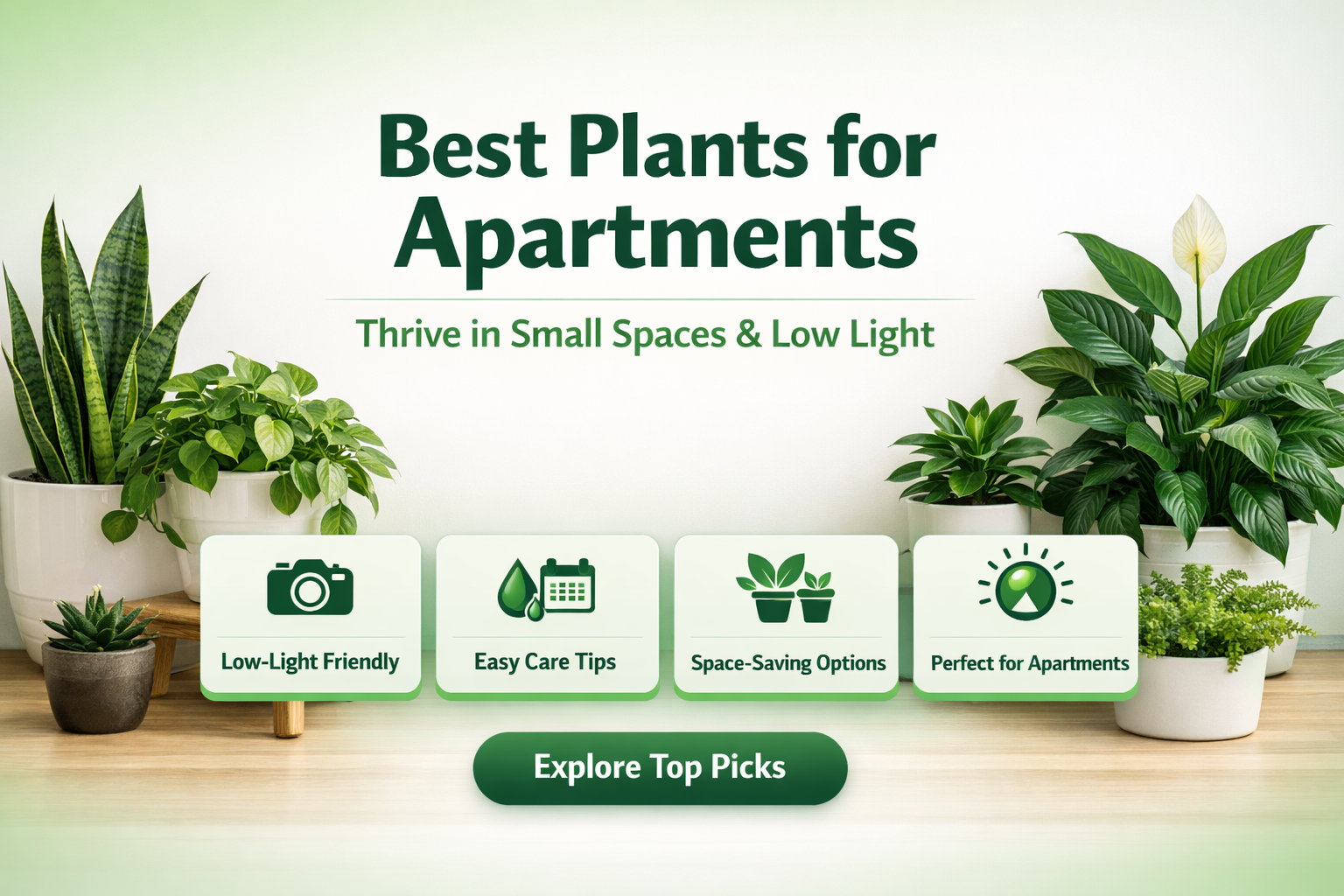
Living in an apartment shouldn't mean sacrificing the joy of greenery. Whether you're an urban dweller with a cozy studio or a city loft, incorporating plants can transform your living space and make it feel far more inviting. The key is choosing the right species that can adapt to the unique challenges of apartment living – namely, limited space and often less-than-ideal natural light conditions. Don't despair if your windows face a brick wall or your square footage is measured in hundreds, not thousands; plenty of resilient and beautiful plants are perfectly suited for your home.
This comprehensive guide will help you discover the best plants for apartments, focusing on varieties that thrive in small spaces and low light. We'll delve into the benefits of bringing nature indoors, highlight top apartment-friendly houseplants, share creative display ideas to maximize your available space, and provide essential care tips tailored for urban environments. Get ready to cultivate your own thriving indoor oasis, no matter how compact your apartment may be.
From beginners seeking their first easy-care companion to seasoned plant parents looking to expand their collection, this article has everything you need to know. Let's turn your apartment into a lush, green sanctuary!
Transform Your Apartment with Greenery: Benefits & Challenges
Adding plants to your apartment goes beyond mere decoration; it's an investment in your well-being and the aesthetic appeal of your home. Some research suggests that being around greenery may support feelings of wellbeing, though the reported effects are modest and vary between studies. Houseplants are not a substitute for proper ventilation or air filtration, and they are not a treatment for any health condition. For apartment dwellers, who often contend with concrete landscapes and limited outdoor access, this connection to nature becomes even more vital. However, urban living presents a unique set of hurdles for aspiring plant parents.
The Perks of Apartment Plants
Imagine waking up to the sight of vibrant green leaves or unwinding in an evening surrounded by calming natural textures. Houseplants bring life and color to often sterile apartment environments, making them feel more inviting and homey. They can act as natural humidifiers, particularly beneficial in dry climates or during colder months when heating systems are in full swing. Psychologically, caring for a living thing provides a sense of purpose and routine, offering a refreshing break from the fast pace of city life. Moreover, strategic placement of plants can soften harsh corners, delineate living areas, and add architectural interest, even in the smallest of rooms. Many people find the act of nurturing something green genuinely calming, and it can foster a real sense of accomplishment as your plants flourish — though it is not a treatment for anxiety or any medical condition.
Navigating Urban Plant Parenthood
Despite the numerous benefits, apartment life poses specific challenges for plant care. The most significant hurdles are often limited natural light and restricted space. Many apartments, especially in dense urban areas, have windows that receive indirect light, or are shaded by neighboring buildings. This means traditional sun-loving plants may struggle. Secondly, floor space is a luxury, necessitating creative solutions for plant placement. Other factors include fluctuating indoor temperatures due to HVAC systems, dry air, and the potential lack of outdoor access for repotting or pest management. Understanding these constraints is the first step toward successful apartment plant parenting. Fortunately, a wide array of resilient and adaptable species exist that can not only survive but thrive in these conditions, making it easier than ever to enjoy the benefits of indoor greenery.
Top Apartment-Friendly Houseplants for Any Corner
Choosing the best plants for apartments means looking for species that tolerate low light, don't grow too large, and are generally forgiving of less-than-perfect conditions. Here’s a curated list of top apartment-friendly houseplants perfect for brightening any urban dwelling.
Low-Light Champions
These plants are superstars for apartments with minimal natural light. They'll survive and often thrive even when placed a few feet from a window or in a north-facing room.
- Snake Plant (Sansevieria trifasciata): Virtually indestructible, the snake plant is famous for its architectural upright leaves and extreme tolerance to neglect. It thrives in low light but can also handle brighter conditions, making it incredibly versatile. For more details on its care, check out our Snake Plant Care Guide: Thriving with Sansevieria.
- ZZ Plant (Zamioculcas zamiifolia): With glossy, dark green leaves, the ZZ plant is another low-maintenance hero. It can go weeks without water and tolerates very low light, making it ideal for busy apartment dwellers.
- Pothos (Epipremnum aureum): Available in various variegated forms, Pothos is a trailing plant that brightens up any space. It's incredibly forgiving and can adapt to different light levels, though it prefers medium to low indirect light. Its cascading vines are perfect for shelves. Dive deeper into its care with our Pothos Plant Care Made Easy: A Beginner's Guide to Trailing Beauty.
- Cast Iron Plant (Aspidistra elatior): Living up to its name, this plant is incredibly tough. It tolerates deep shade, infrequent watering, and a range of temperatures, making it a true survivor for challenging apartment spots.
Compact & Charming Choices
For those truly tiny nooks and crannies, these plants offer beauty without demanding much real estate.
- Aloe Vera (Aloe barbadensis miller): Not just a pretty face, Aloe Vera is known for its medicinal properties. It's compact and requires bright, indirect light, making it suitable for a sunny windowsill or a well-lit shelf.
- Prayer Plant (Maranta leuconeura): With striking variegated leaves that fold up at night, the Prayer Plant is a unique addition. It prefers medium to low indirect light and high humidity, making a bathroom a good spot.
- Peperomia (various species): This diverse genus offers many small, attractive plants with unique leaf shapes and colors. Most Peperomias stay compact, prefer medium indirect light, and are easy to care for, perfect for desks or small shelves.
Trailing Beauties for Vertical Space
When floor space is limited, look up! Trailing plants are perfect for hanging baskets or high shelves, adding drama and greenery without occupying precious ground.
- Philodendron Brasil (Philodendron hederaceum 'Brasil'): A vibrant cultivar of the classic Heartleaf Philodendron, 'Brasil' features variegated leaves with splashes of lime green and yellow. It's as easy to care for as its all-green cousin, thriving in medium to low indirect light and perfect for letting its vines cascade.
- Spider Plant (Chlorophytum comosum): Known for producing "spiderettes" that dangle from the mother plant, Spider Plants are fun, easy to care for, and very easy to propagate. They prefer bright, indirect light but can tolerate lower light conditions.
Don't forget that even these tolerant plants will benefit from tools like the BenePlant app to help you stay on track. If you're unsure about the light conditions in your apartment, BenePlant's built-in Master Light & Moisture: BenePlant's Built-in Tools for Healthy Growth can give you precise readings, ensuring you pick the perfect spot for each plant.
Maximizing Light & Space: Creative Display Ideas
Apartment living often means working with limited square footage and sometimes, challenging light conditions. But with a bit of creativity, you can transform your small space into a lush urban jungle. Maximizing both light and space is crucial for successful apartment plant parenting.
Vertical Gardening Solutions
When floor space is scarce, the only way to go is up! Vertical gardening is a game-changer for apartment dwellers.
- Hanging Planters: Utilize ceilings and curtain rods for hanging baskets. Pothos, Philodendrons, and Spider Plants look stunning as they cascade down. Ensure your hooks are securely installed.
- Wall-Mounted Shelves: Install floating shelves or tiered wall shelves to create dedicated plant zones. This not only saves floor space but also adds a decorative element. Small succulents, Peperomias, or even miniature Snake Plants fit perfectly.
- Plant Stands & Tiered Planters: A multi-tiered plant stand can hold several plants in the footprint of one. Choose sleek, minimalist designs that don't overcrowd your space.
- Window Shelves: If you have a good window, add a transparent shelf that suctions to the glass or hangs from the frame. This allows light to pass through while providing extra surface area for small plants.
Smart Placement for Optimal Light
Understanding the light dynamics of your apartment is paramount. Different windows offer different light qualities.
- South-Facing Windows: Offer the brightest, most direct light. Ideal for succulents, cacti, and sun-loving herbs. However, too much direct sun can scorch leaves, so use sheer curtains if the light is too intense.
- East-Facing Windows: Provide gentle morning sun, which is ideal for a wide range of plants like Prayer Plants, Ferns, and some Peperomias.
- West-Facing Windows: Deliver intense afternoon sun, similar to south-facing but often hotter. Adapt with sheer curtains or place plants a little further back.
- North-Facing Windows: Offer the lowest light, consistent and indirect. Perfect for the "low-light champions" we discussed earlier, such as ZZ Plants, Snake Plants, and Cast Iron Plants.
- Reflective Surfaces: Use mirrors or light-colored walls strategically placed opposite a window to reflect light deeper into a room, benefiting plants further away from the source.
- Grow Lights: For truly dim spaces, consider Grow Lights for Houseplants: Your Complete Guide & Product Picks. Modern grow lights are compact and aesthetically pleasing, providing the necessary spectrum for plant growth without taking up much space.
Decorative Touches
Integrate your plants seamlessly into your apartment's decor. Choose planters that complement your style, whether it's minimalist ceramic, rustic terracotta, or vibrant glazed pots. Varying plant heights and textures can create visual interest. Remember, less can be more in small spaces; a few well-placed, thriving plants can have a greater impact than many struggling ones. And for managing all these beauties, remember that a tool like BenePlant can help you keep track of each plant's needs, ensuring they receive the right care to flourish in your urban sanctuary.
Care Tips for Urban Dwellers: Adapting to Apartment Life
Caring for plants in an apartment requires a slightly different approach than in a house with a garden. Understanding your urban environment and adapting your care routine accordingly will ensure your apartment friendly plants not only survive but truly thrive.
Understanding Your Apartment's Microclimate
Every apartment has its own unique microclimate, influenced by factors like window orientation, heating and air conditioning systems, and even nearby heat-retaining buildings.
- Light Assessment: As mentioned, light is key. Spend a day observing how sunlight moves through your apartment. Use a light meter tool (like the one in the BenePlant app) to get precise readings. This will guide your plant placement and help you choose the right species.
- Humidity Levels: Apartments can be notoriously dry, especially in winter with central heating. Many popular houseplants, particularly tropical varieties, crave higher humidity. Grouping plants together, using pebble trays, or running a small humidifier can significantly help. For more in-depth advice, check out our guide on Mastering Indoor Plant Humidity: Keep Your Greens Thriving.
- Temperature Fluctuations: Avoid placing plants directly next to vents or drafty windows, as sudden temperature changes can stress them. Most houseplants prefer stable room temperatures between 65-75°F (18-24°C).
Smart Watering & Feeding
Overwatering is the number one killer of houseplants, especially in lower light conditions where plants use less water.
- The Finger Test: Always check the soil moisture before watering. Stick your finger about an inch or two into the soil. If it feels dry, it's time to water. If it's still damp, wait. This is a fundamental principle highlighted in our Watering Your Plants: The Ultimate Guide for Beginners.
- Drainage is Crucial: Always use pots with drainage holes and saucers. Never let your plants sit in standing water.
- Automated Reminders: Keeping track of watering schedules for multiple plants can be daunting. BenePlant's Personalized Care Schedules offer automated watering and fertilizing reminders, ensuring your plants get what they need, precisely when they need it. This feature integrates with Google Calendar, making it easy to manage.
- Fertilizing Sparingly: In lower light, plants grow slower and require less fertilizer. Fertilize only during the growing season (spring and summer) and at half the recommended strength.
Troubleshooting Common Apartment Plant Issues
Even with the best intentions, plants can run into issues. Many common problems stem from light, water, or pests.
- Yellowing Leaves: Often a sign of overwatering or nutrient deficiency. Refer to Why Are My Houseplant Leaves Turning Yellow? Diagnose & Fix It! for a full breakdown.
- Drooping Leaves: Can indicate either underwatering or overwatering. Check soil moisture.
- Pests: Apartment plants are susceptible to common pests like spider mites or mealybugs. Inspect your plants regularly and act quickly if you spot any invaders. Our Indoor Plant Pest Control: Identify, Treat, & Prevent Common Invaders guide can help.
- Root Rot: A serious consequence of consistent overwatering. Learn how to prevent and treat it with our Root Rot Treatment & Prevention: Save Your Overwatered Plants article.
By being observant and utilizing tools like the BenePlant app, you can easily diagnose and address these issues, keeping your apartment plants healthy and vibrant. Remember, every plant journey starts with learning, and our The Ultimate Beginner Houseplant Guide: Start Your Green Journey Today is a great resource to lay a strong foundation.
FAQ Section
Q1: What are the absolute easiest plants for apartment beginners?
A1: For beginners in apartments, the Snake Plant, ZZ Plant, and Pothos are incredibly forgiving. They tolerate a wide range of conditions, including low light and infrequent watering, making them perfect starter plants.
Q2: How do I know if my apartment has "low light" conditions?
A2: An apartment is considered "low light" if most areas are several feet away from a window, or if windows face north or are heavily shaded by other buildings. If you can't easily read a book without artificial light during the day, it's likely low light. For precise measurements, use a light meter tool like the one integrated into the BenePlant app.
Q3: Can I really grow plants in an apartment with no windows?
A3: While challenging, it's possible with the right approach. You'll need to rely entirely on artificial grow lights. Choose low light houseplants that are more tolerant, and ensure the grow light provides adequate intensity and duration (12-16 hours a day). Some ZZ Plants and Snake Plants might survive, but specialized lighting makes it much easier.
Q4: My apartment is very small. How can I fit plants without it feeling cluttered?
A4: Focus on vertical space! Utilize hanging planters, wall-mounted shelves, and tiered plant stands. Choose compact plant varieties and integrate them with your decor. A few well-placed plants can have more impact than many squeezed-in ones.
Q5: How often should I water my apartment plants?
A5: There's no fixed schedule, as it depends on the plant type, pot size, temperature, humidity, and light levels in your apartment. The best method is to check the soil moisture with your finger or a moisture meter. Water when the top inch or two of soil is dry. Apps like BenePlant can provide personalized watering reminders based on your specific plants and environment, taking the guesswork out of it.
Conclusion
Transforming your apartment into a green sanctuary is not just a dream, it's an achievable reality. By thoughtfully selecting the best plants for apartments – those resilient species that thrive in small spaces and tolerate lower light – you can bring the profound benefits of nature into your urban home. We've explored the hardiest low-light champions, charming compact varieties, and elegant trailing plants that add life without demanding extensive room.
Remember that successful apartment plant parenting hinges on understanding your unique environment. Maximize light with clever placement, utilize vertical space, and adapt your care routine to suit your apartment's microclimate. With the right plant choices and smart care practices, your urban dwelling can become a vibrant, oxygen-rich haven that boosts your well-being and delights your senses.
Ready to embark on your green journey or enhance your existing collection? Don't let the challenges of apartment living deter you. Tools like BenePlant can be your ultimate companion, offering AI plant identification, personalized care schedules, light meter tools, and more to simplify your plant care. Start cultivating your thriving indoor oasis today and experience the joy of apartment gardening!
Ready to make apartment plant care a breeze? Discover BenePlant's premium features!
Share this article