Blog Article
Fertilizing Houseplants: What, When, and How Much
Master houseplant fertilizing! Learn what, when, and how much plant food your indoor green companions need for vibrant growth with our ultimate guide.
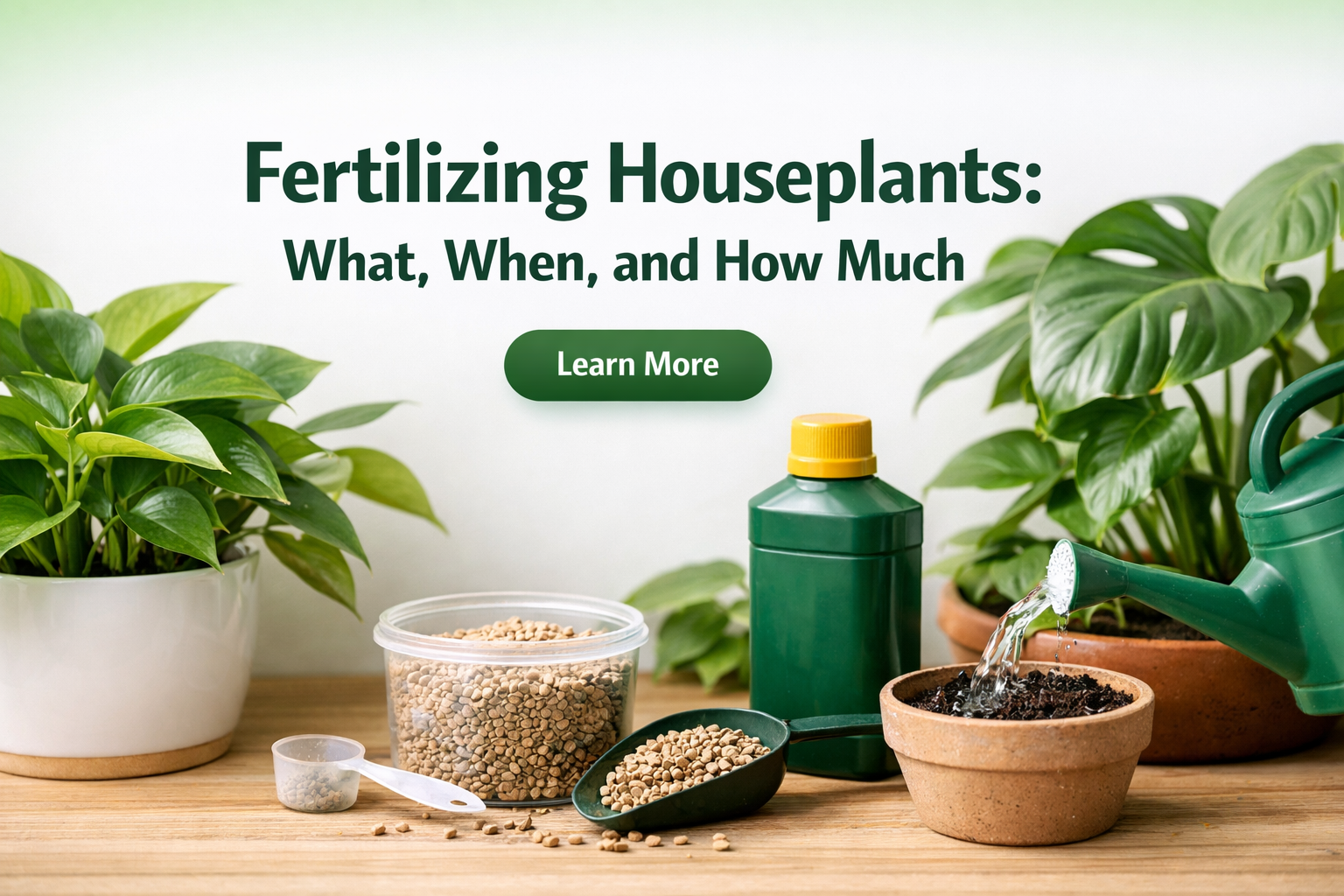
Are your houseplants looking a little lackluster? Do their leaves seem dull, or is their growth slowing to a crawl? Just like us, plants need a balanced diet to thrive, and that's where fertilizing houseplants comes in. While sunlight, water, and proper soil are foundational, nutrient supplementation is the secret ingredient that can transform a struggling plant into a lush, vibrant showstopper. This comprehensive houseplant fertilizer guide will demystify the process, helping you understand precisely what your green companions need, when to feed them, and how much to apply for optimal health and vigor.
Many beginner plant parents overlook fertilization, assuming their plants get everything they need from potting soil. While fresh potting mix provides initial nutrients, these reserves are quickly depleted, especially in pots where nutrients can't be naturally replenished as they would in the ground. Learning when to fertilize plants and choosing the best plant food for your specific varieties is crucial for sustained growth, brighter foliage, and even encouraging blooms. Get ready to unlock the full potential of your indoor jungle as we dive deep into the essential world of plant nutrition.
Fueling Growth: Why Fertilizing Your Plants Matters
Think of fertilizer as a multivitamin for your plants. While they create their own food through photosynthesis (using sunlight, water, and CO2), they still require essential mineral nutrients from the soil to carry out all their metabolic functions. Without adequate nutrient needs being met, plants can become stunted, weak, susceptible to pests, and lose their vibrant color.
Proper fertilization boosts overall plant health, strengthens cell walls, enhances photosynthesis efficiency, and supports the development of new leaves, stems, and roots. It’s particularly vital for houseplants because their roots are confined to a pot, unable to reach out for new nutrient sources as they would in nature. Over time, watering washes away soluble nutrients, and the plant itself consumes what's available, making regular replenishment necessary.
The Essential Nutrients: NPK and Beyond
The most talked-about nutrients for plant growth are Nitrogen (N), Phosphorus (P), and Potassium (K) – collectively known as NPK. These are the macronutrients, required in the largest quantities:
- Nitrogen (N): Crucial for lush, green foliage and stem growth. It's a key component of chlorophyll, the compound plants use for photosynthesis.
- Phosphorus (P): Essential for root development, flowering, fruiting, and overall energy transfer within the plant.
- Potassium (K): Supports general plant health, disease resistance, water regulation, and aids in flower and fruit development.
Beyond NPK, plants also need secondary macronutrients like Calcium, Magnesium, and Sulfur, and trace micronutrients such as Iron, Manganese, Boron, Zinc, Copper, and Molybdenum. While needed in smaller amounts, a deficiency in any of these can lead to significant health issues. A good quality, balanced houseplant fertilizer will typically contain a comprehensive blend of these elements.
Signs Your Plant Might Be Hungry
Your plants often communicate their needs through visual cues. Recognizing these signs can help you determine if it's time to fertilize or adjust your feeding routine:
- Slow or stunted growth: If your plant isn't putting out new leaves or growing noticeably, it might lack energy from nutrients.
- Yellowing leaves (chlorosis): Often starting with older leaves, this can indicate nitrogen deficiency. However, Why Are My Houseplant Leaves Turning Yellow? Diagnose & Fix It! explains it can also be a sign of overwatering or other issues.
- Pale green foliage: A general lack of vibrancy or faded color compared to its usual healthy hue.
- Lack of flowering: If a typically blooming plant isn't producing flowers, it could be deficient in phosphorus.
- Weak stems or small leaves: These can suggest a general nutrient deficiency.
- Purple tint on leaves: Sometimes a sign of phosphorus deficiency.
Remember, these symptoms can also point to other problems like improper watering, light issues, or pests. Always consider your full care routine when diagnosing plant issues, perhaps by using an app like BenePlant: Your Ultimate AI-Powered Plant Care Companion App to track care and identify potential problems.
Understanding NPK: Choosing the Right Fertilizer
When you pick up a bottle of plant food, you'll see three numbers prominently displayed, for example, 5-10-5 or 20-20-20. These numbers represent the percentage by weight of Nitrogen (N), Phosphorus (P), and Potassium (K) in the fertilizer. This NPK ratio is crucial for selecting the best plant food for your specific houseplant needs.
- Balanced Fertilizers (e.g., 20-20-20 or 10-10-10): These are general-purpose fertilizers suitable for most houseplants, promoting overall healthy growth. They're a good starting point for many indoor plants.
- High Nitrogen Fertilizers (e.g., 20-10-10): Ideal for plants primarily grown for their foliage, like ferns, monsteras, or peace lilies, as nitrogen encourages lush leaf growth.
- High Phosphorus Fertilizers (e.g., 5-10-5): Beneficial for blooming plants like African violets, orchids, or hoyas, as phosphorus supports flower and fruit production.
- Low NPK Fertilizers: Sometimes preferred for sensitive plants or during specific times of the year (like dormancy) when a very mild boost is needed.
Deciphering Fertilizer Labels
Beyond the NPK ratio, fertilizer labels provide other vital information:
- Formulation: Liquid, granular, slow-release, or spikes.
- Micronutrients: Look for fertilizers that include a range of micronutrients to ensure a complete diet.
- Organic vs. Synthetic: This describes the nutrient source.
Organic vs. Synthetic: What's Best for Your Plants?
Both organic and synthetic fertilizers have their place in houseplant care.
- Synthetic Fertilizers: Chemically produced, they provide nutrients in readily available forms for immediate plant uptake. They are often precisely balanced and easy to measure. However, they can lead to salt buildup in the soil and are more prone to over-fertilization if not used carefully.
- Organic Fertilizers: Derived from natural sources like compost, worm castings, fish emulsion, or kelp meal. They release nutrients slowly as microorganisms in the soil break them down, improving soil health over time. They are less likely to cause nutrient burn but can have a stronger odor and nutrient content can be less precise.
Many plant parents use a combination or choose based on personal preference. For beginners, a balanced liquid synthetic fertilizer is often easiest to control, while those seeking a more natural approach might prefer organic options. You can find a range of options, including various fertilizers and plant care tools, at a Shop Curated Plant Care Products: Everything Your Plants Need in One Place.
The Goldilocks Principle: How Much and How Often?
Finding the "just right" amount and frequency for fertilizing is perhaps the most critical aspect of houseplant care. Too much fertilizer can burn roots and kill your plant, while too little will leave it hungry. The general rule of thumb is "less is more" and "dilute, dilute, dilute."
Most liquid fertilizers are concentrated and must be diluted before use. Always follow the instructions on your chosen fertilizer packaging. As a safe practice, many experienced plant parents recommend diluting the fertilizer to half or even quarter strength, especially for sensitive plants or during their first few feeding sessions.
Avoiding Over-Fertilization: Less is More
Over-fertilization is a common mistake and often more damaging than under-fertilization. Signs of over-fertilization include:
- Crispy, brown leaf tips or edges: This is often a sign of nutrient burn or salt buildup.
- White crust on the soil surface or pot rim: Indicating mineral and salt accumulation.
- Sudden leaf drop or wilting: Can signify severe root damage.
- Stunted growth despite feeding: The plant is struggling to absorb water due to damaged roots.
If you suspect over-fertilization, flush the soil thoroughly with plain water several times to wash out excess salts, then hold off on fertilizing for a month or two.
Application Methods: Liquid, Granular, and Spikes
- Liquid Fertilizers: The most common for houseplants. They are mixed with water and applied during regular watering. This allows for precise control over dilution and immediate nutrient availability.
- Slow-Release Granular Fertilizers: These pellets are mixed into the soil or sprinkled on top. They release nutrients gradually over several months, often activated by water and temperature. Great for busy plant parents, but offer less control.
- Fertilizer Spikes: Similar to slow-release granules but in a more compact form that you push into the soil. Convenient but can lead to uneven nutrient distribution.
For beginners, a diluted liquid fertilizer applied consistently during the growing season is generally the safest and most effective method.
Seasonal Fertilizing & Signs Your Plant Needs Food
The timing of your fertilization is almost as important as what you use. Plants have active growing seasons and dormant periods, and their nutrient needs change accordingly.
Most houseplants are actively growing during the spring and summer months (roughly March to September in the Northern Hemisphere). This is when they are putting out new leaves, stems, and flowers, and their metabolism is high. This is the prime time for regular fertilization. You might fertilize every 2-4 weeks during this period, depending on the plant and fertilizer strength.
Adapting to the Seasons
- Spring & Summer: Fertilize regularly at full or half strength. This is when your plants are doing most of their growing and will readily use the nutrients.
- Fall: As light levels decrease and temperatures drop, plant growth naturally slows down. Reduce fertilization frequency and strength, perhaps to once every 4-6 weeks at quarter strength. This prepares the plant for dormancy. Check out our guide on Seasonal Houseplant Care: Adapting Your Routine for Every Season for more detailed tips.
- Winter: Most houseplants enter a period of dormancy, significantly slowing their growth. Fertilizing during this time can be detrimental, leading to salt buildup and root burn as the plant isn't actively utilizing the nutrients. It's generally best to stop fertilizing altogether during the deep winter months (December to February) or use a very weak solution only if the plant shows signs of active growth under grow lights.
When to Hold Back: Dormancy and Stress
Always prioritize the plant's health over a strict fertilizing schedule. Never fertilize a plant that is:
- Stressed: If it's drooping, wilting, or showing signs of pest infestation or disease, focus on resolving the primary issue first. Fertilizing a stressed plant can worsen its condition.
- Recently repotted: Fresh potting soil contains enough nutrients for several weeks. Wait at least 4-6 weeks after repotting before resuming fertilization. Learn How to Repot Houseplants: A Step-by-Step Guide for Healthy Growth.
- Dormant: As discussed, winter is a time of rest for most plants.
Pay attention to your plant's individual needs. A fast-growing plant in bright light will consume nutrients quicker than a slow-growing plant in lower light. Tools like a light meter can help you understand the light levels your plant is getting, ensuring it's in an optimal spot to efficiently use nutrients.
FAQ Section
Q1: Can I use outdoor garden fertilizer on my houseplants?
A: It's generally not recommended. Outdoor fertilizers are often too strong and not specifically formulated for the confined environment of a potted houseplant. They can easily lead to root burn and salt buildup. Stick to fertilizers specifically labeled for houseplants.
Q2: How often should I fertilize new plants?
A: If you've just brought a new plant home from the nursery, it's likely already been fertilized recently and is in fresh potting mix. Wait at least 4-6 weeks before beginning your regular fertilization routine. Give it time to adjust to its new environment.
Q3: What if I forget to fertilize for a while?
A: Don't panic! Missing a feeding cycle is usually not detrimental. Just resume your schedule with a diluted solution. It's far better to under-fertilize slightly than to over-fertilize. Your plant will likely just grow a bit slower.
Q4: Are coffee grounds or banana peels good natural fertilizers?
A: While coffee grounds add nitrogen and banana peels contain potassium, they release nutrients very slowly and inconsistently. They aren't a balanced or reliable source of all essential nutrients and can sometimes attract pests or cause fungal issues if overused. A balanced organic fertilizer is a better choice for consistent nutrition.
Q5: Do all houseplants need fertilizer?
A: Most houseplants benefit from fertilization during their active growing season. However, some very slow-growing plants or those that prefer nutrient-poor soil (like cacti and succulents, which have very different nutrient needs) require less frequent or specialized feeding. Always research the specific needs of your plant.
Conclusion
Mastering the art of fertilizing houseplants is a cornerstone of successful indoor gardening. By understanding the essential nutrient needs of your plants, deciphering NPK ratios, and applying the "Goldilocks Principle" of feeding (not too much, not too little, but just right), you can unlock vibrant growth and robust health. Remember to adjust your feeding schedule with the seasons, always dilute your fertilizer, and pay close attention to the visual cues your plants provide.
With this knowledge, you're well on your way to a thriving indoor oasis. And for a truly streamlined approach to plant care, consider integrating your routine with tools like BenePlant. Our AI plant identification helps you know exactly what your plant needs, while personalized care schedules ensure you never miss a watering or fertilizing reminder. Explore our premium features today and turn your home into a verdant paradise! Check out BenePlant's Subscription Plans and transform your plant parenting experience.
Share this article